
Kure: The Fragrance of Adventure
掲載日:2025年12月15日
Kure: The fragrance of adventure
Nestled between the islands of Honshu, Shikoku, and Kyushu lies the enigmatic city of Kure, a hidden gem far from the beaten tourist paths. For those willing to venture off the well-worn path, the region offers a unique scent of adventure, blending notes of cycling escapades, culinary delights,traditional artistry, and sunsets over the shoreline. Just like a fine perfume, it is worth taking the time to savor and appreciate all that Kure has to offer.
Top Note: Exploring the isles on two wheels
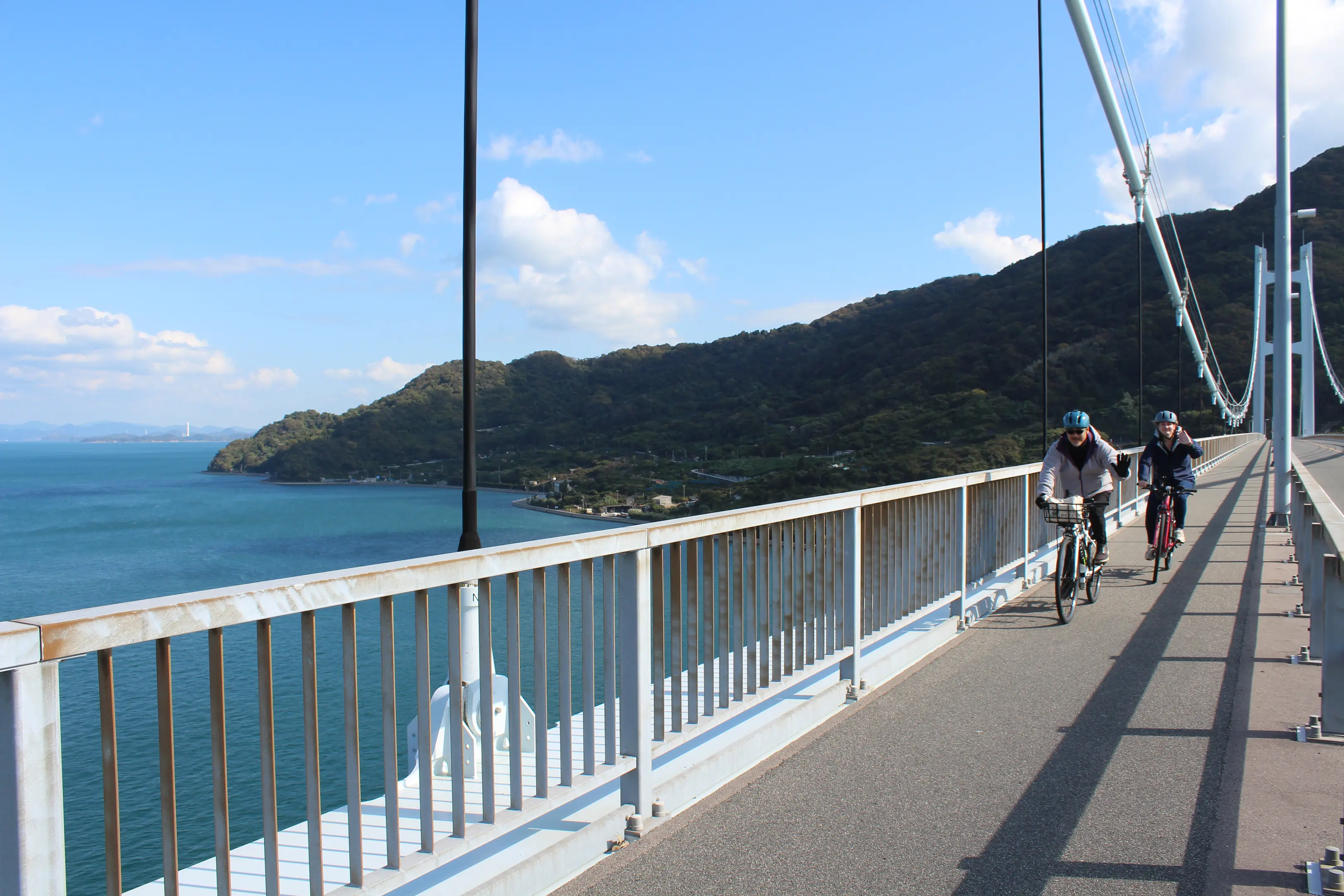
From Hiroshima, you can reach Kawajiri in about one hour by train. This is where your adventure begins, with the Tobishima Kaido Cycling Route, which stretches to Imabari.Seven islands connected to each other and to the mainland by bridges form a surprising path: a blue line on the ground indicating the direction, very few cars, the brilliant contrast of orange citrus fruits against turquoise-blue sea, and the scent of salty wind. Welcome to a new world.
Takao Saito, an experienced guide, shares his passion for local history. He explains how the development of transport has influenced the small port towns along the way. We cycle at a moderate pace, taking in everything: the sound of the waves, the rhythm of our pedaling.
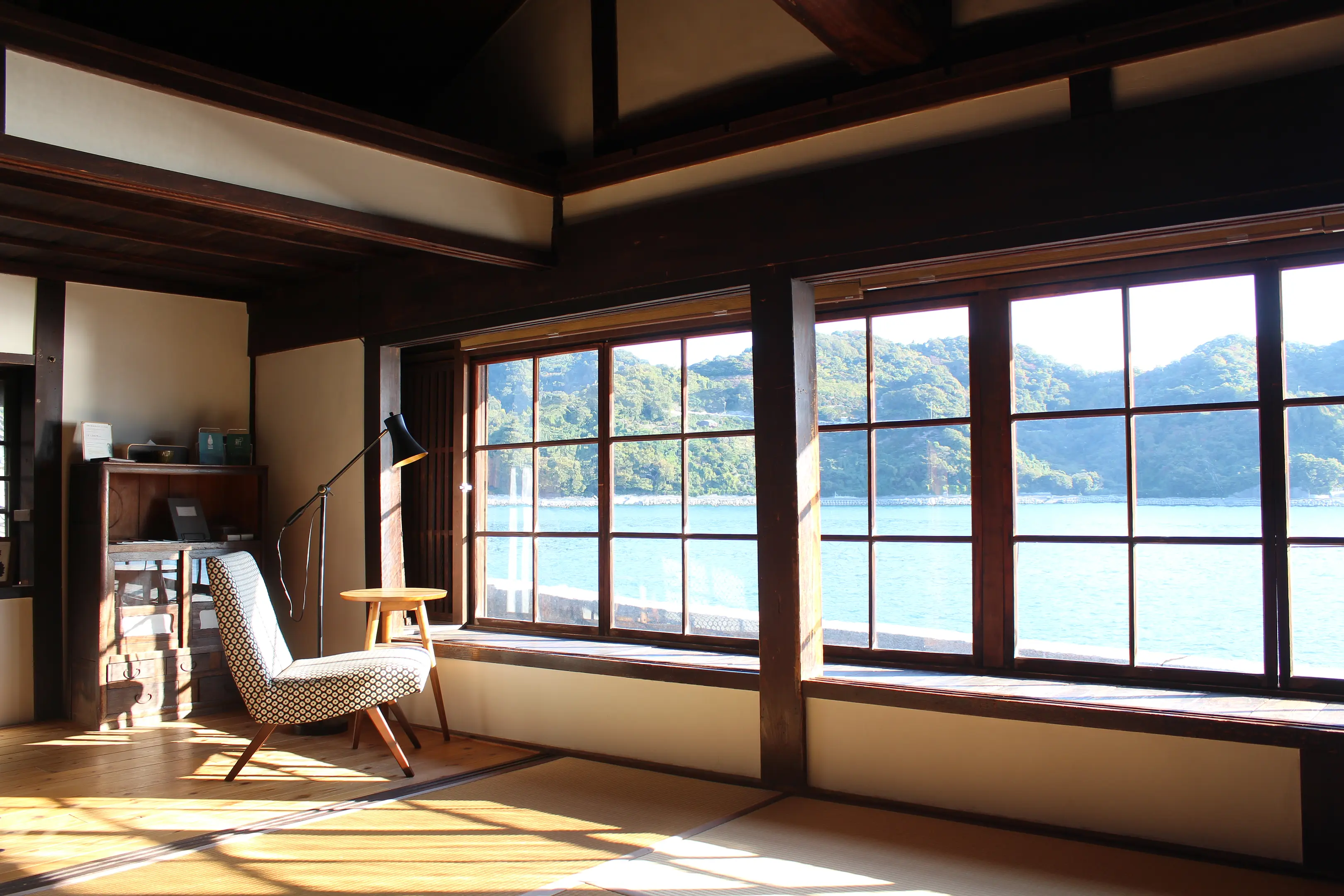
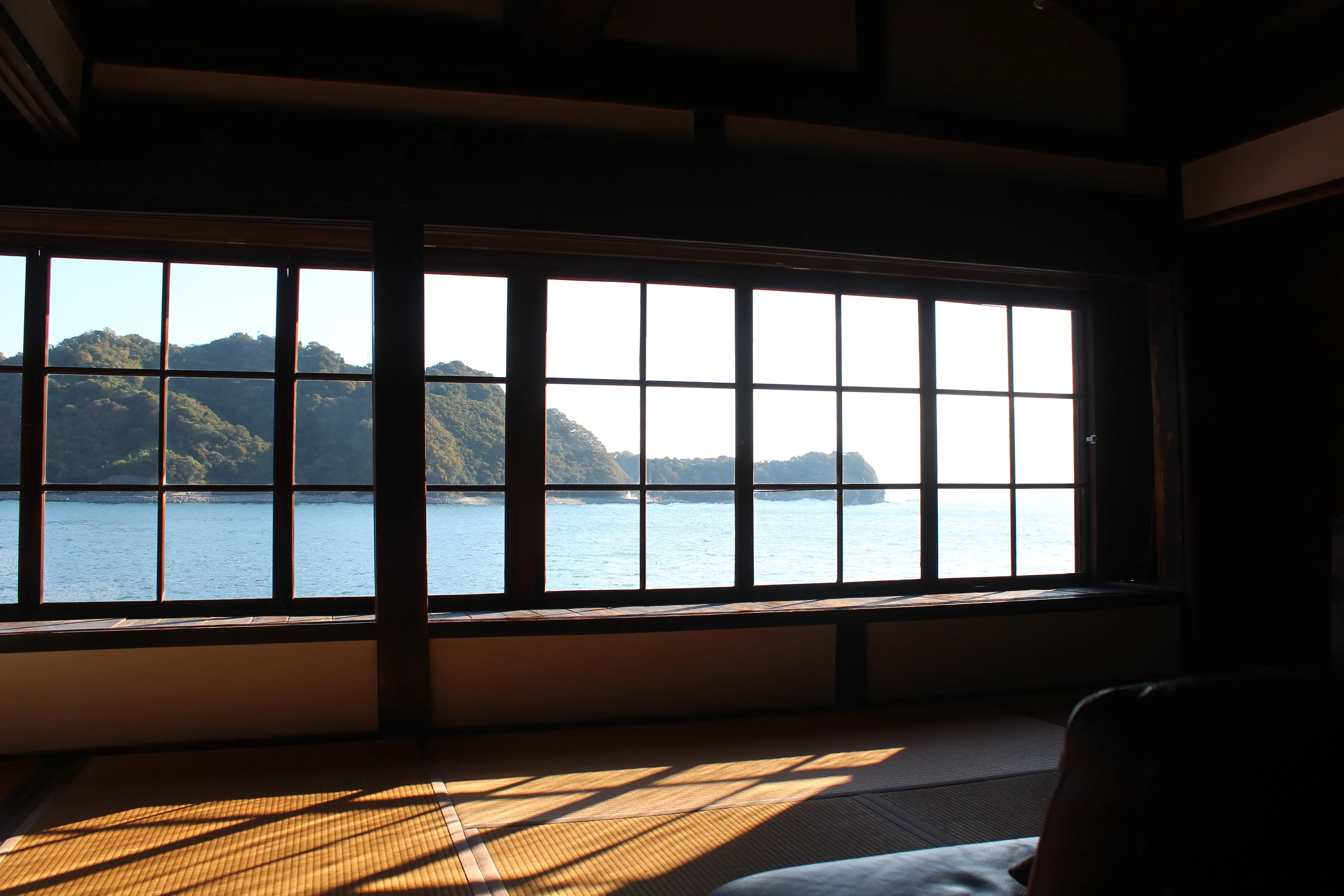
After a handful of skilled pedal pushes, Mitarai emerges as if trapped in a timeless moment.Here, the enchanting Shintoyo Guesthouse welcomes weary travelers with a blend of allure and discretion. Akira Inoue, its owner, spent 15 years restoring century-old buildings,preserving their soul. “It’s breathtaking, but it’s not ostentatious or expensive. I can’t compare it to anything else in history,” he admits. “It’s truly priceless.” This philosophy of restoration without erasing the past also caught the attention of the film industry. The guesthouse served as a filming location for the critically acclaimed film Drive My Car.
In the evening, one can unwind at the SHINCHIBANA SAUNA, a Meiji-era relic that has recently undergone renovations. The warm and resinous atmosphere of this historic town provides a unique and luxurious experience, as one suspends time and immerses oneself in the past.
Sea salt and savory flavors
Now, we are heading to the neighboring island of Osakikamijima, home to the oysters and shrimp that have given this region its culinary fame.
Suzuki Takashi warmly greets us at Farm Suzuki. Inspired by practices observed inAustralia and France, he explains with patience and passion the secrets of his craft: why certain oysters have thick shells, how water circulation stimulates growth, and how basketsare raised to separate sizes. Each gesture reveals a deep understanding of his environment.
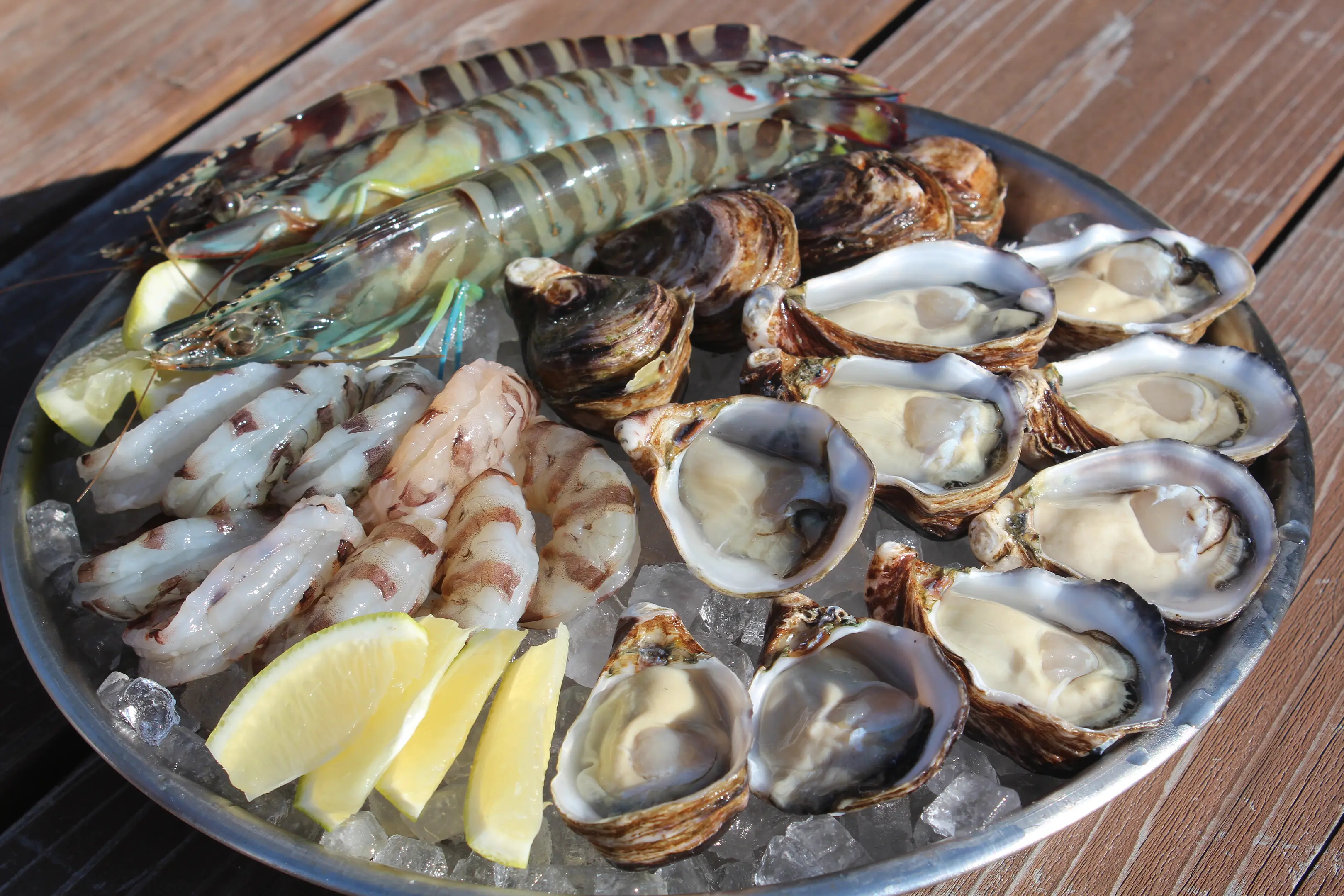
What is particularly captivating is that Suzuki cultivates the renowned French oysters Claire,celebrated for their quality, as well as striped tiger shrimp. He does so in a unique environment that blends mountain and sea waters. It is a conversation between continents, a melding of global methods, that brings a breath of fresh air and innovation to this part of Japan.
Upon tasting, the fresh products reveal a fleshy and iodine note: shrimp of incomparabletenderness, raw oysters, and homemade salt. Suzuki-san’s passion is infectious. “I believethe French can detect this unique Japanese scent when they arrive,” he says. “When I open a container of French oysters, it smells like France. It makes me just a little happy.” This poetic observation captures an essential truth: every place has its own sensory imprint, and what keeps it alive is precisely this mix of respectful influences.
Transmission of knowledge
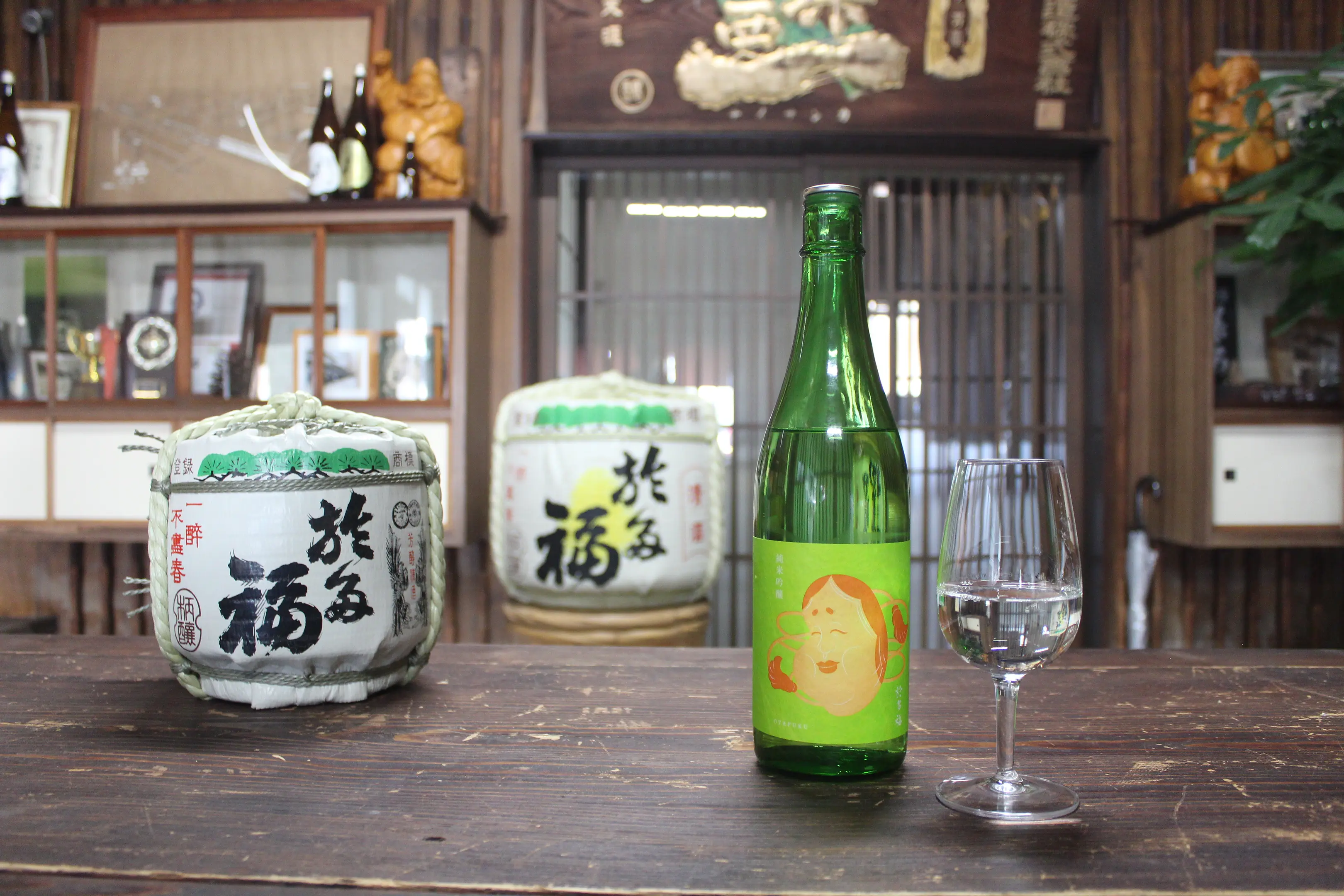
The return to the mainland is thoughtful. We head to Akitsu by taking small coastal roads.The historic brewery Tsuka Shuzo, founded in 1848, is now run by Soichiro Tsuka. Entering the ancient building, visitors are greeted with a unique scent: a blend of fermented rice, koji, and aged wood. Soichiro describes the traditional sake-making process, which distills centuries of expertise into a bottle. From polishing rice to slow fermentation, each step represents a legacy of craftsmanship.
The alcohol has a soft and changing taste, similar to a perfume that evolves on the skin. The journey ends in Takehara, where you learn to make bamboo products. In a simple workshop, you master the art of working with bamboo, using your hands, fibers, and tools.You become immersed in the meditative rhythm of manual labor, realizing that even seemingly insignificant gestures carry centuries of knowledge. We only learn to forget, but something is embedded within us.
The complete fragrance
Suzuki-san’s observation of “the scent of Japan” stays with you, perfectly describing the experience you can have in Kure.
A trip to Tokyo or Kyoto is unforgettable, with its neon lights, temples, and pachinko machines. However, these cities don’t fully reflect Japan. Kure, on the other hand, offers a unique experience. Its landscape, history, producers’ patience, subtle hospitality, knowledge transmission, and the complex flavor of its sake make it stand out. A philosophy emerges: ichigo ichie, the ability to appreciate the present moment and encounters.Kure does not showcase a striking image to impress, but rather a more authentic and accurate portrayal of Japan. A real, authentic Japan, which we rediscover with each memory and which we return to seek.
A different side of Hiroshima: crafts, cruises, and hidden history
Hiroshima carries a heavy weight. The moment we hear the name, images flood back: August 6, 1945, and everything that followed. It’s a story we know, a scar we respect. But we discover another Hiroshima, one that thrives quietly, just a few train stops away. Beyond the memorial sites and the sheer gravity of that history, it’s a place that continues to live and create.
Holding ancestral wisdom in your hand
After a 30-minute car ride from Hiroshima Station to Fude-no-sato, a traditional brush-making workshop where artisans focus solely on the present, perfecting the blend of horsehair and goat hair.
Push the door open, and you’ll enter a captivating store bursting with an array of brushes. From paint brushes to calligraphy tools, makeup applicators, and beyond, each item boasts a kaleidoscope of colors and forms. Descend to the lower level, where you’ll discover interactive areas for exploration and learning about the rich heritage of brushes. Even a rare gem awaits you in the central gallery: the world’s largest brush.
Finally, make your way to the workshop to witness firsthand the meticulous craftsmanship involved in creating traditional Japanese brushes. A master artisan will guide you through the twelve intricate steps required to produce these exquisite works of art.
It all starts with what seems like a simple step: choosing the right hairs. However, a skilled artisan may spend countless hours sifting through dozens of samples, including horsehair, goat chest hair, and goat flank hair, each with its unique texture and ink-absorbing properties. Horsehair provides flexibility and elasticity; goat hair retains ink better but lacks strength. The true art lies in blending these materials in precise proportions. Get the ratio wrong, and your brush won’t write more than five characters before drying out. Master the technique, and you can fill whole pages.
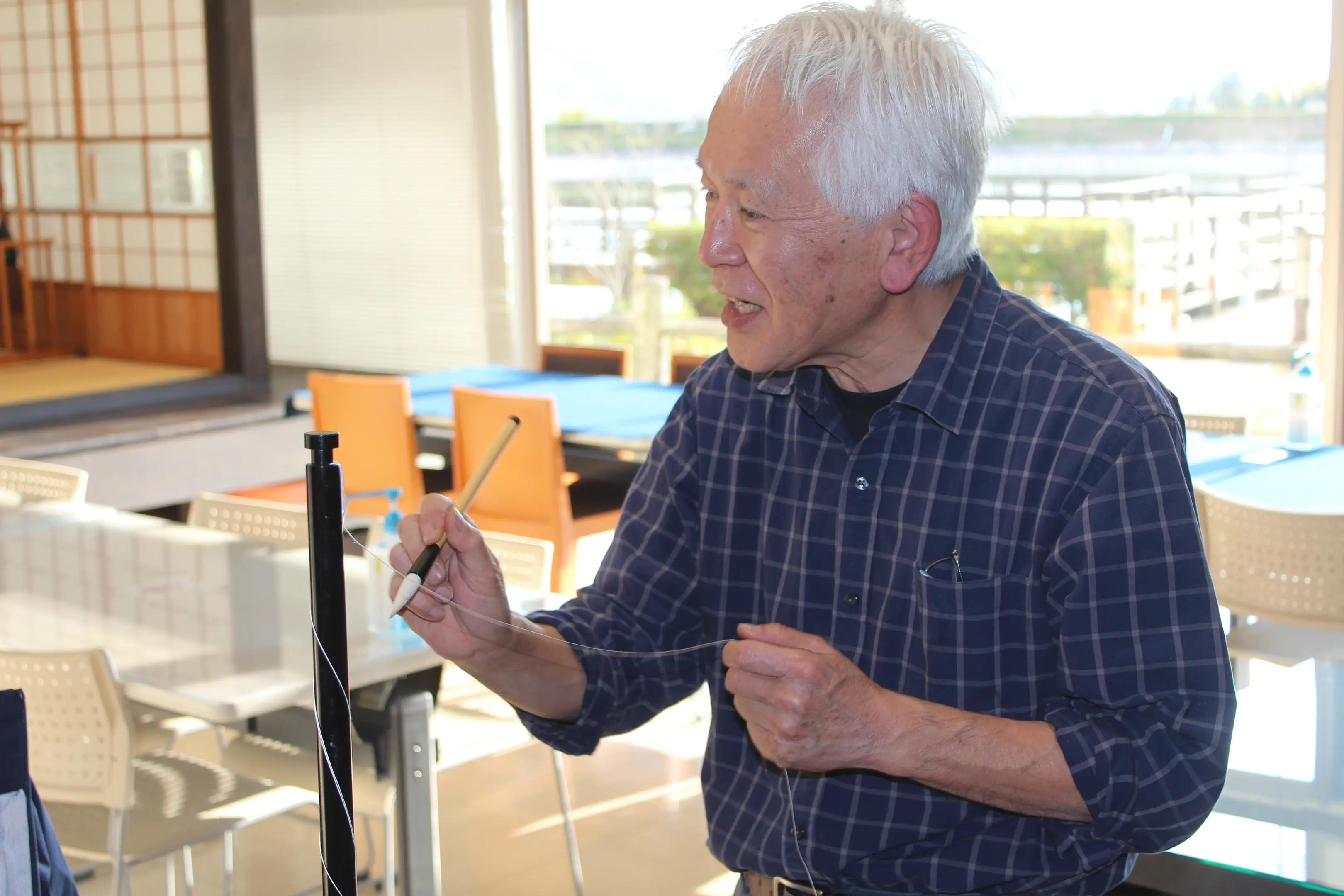
With a blunt-edged knife, one removes twisted or damaged strands, as if sifting sand through a sieve. The core of the brush forms, and seaweed glue called funori coats it to straighten the bristles. As you watch, the effortless movements of the artisan will captivate you.
You can try to create a nice finish for a brush yourself, but don’t expect to become an expert overnight. Your teacher will surely explain that it takes at least three months for your hands to begin to understand a single movement. But you don’t have to master the thread’s tension or sense the perfect alignment of the bristles to understand the experience of creating.
Seeing familiar beauty through new eyes
You’ve probably seen the famous photos. The red torii gate of Miyajima, perfectly framed, stands in the water. It’s one of Japan’s most famous images—and one of its most crowded, with thousands of visitors standing on the shore each day, cameras raised, all trying to recreate the same shot.
But what if you approached it from the water instead?
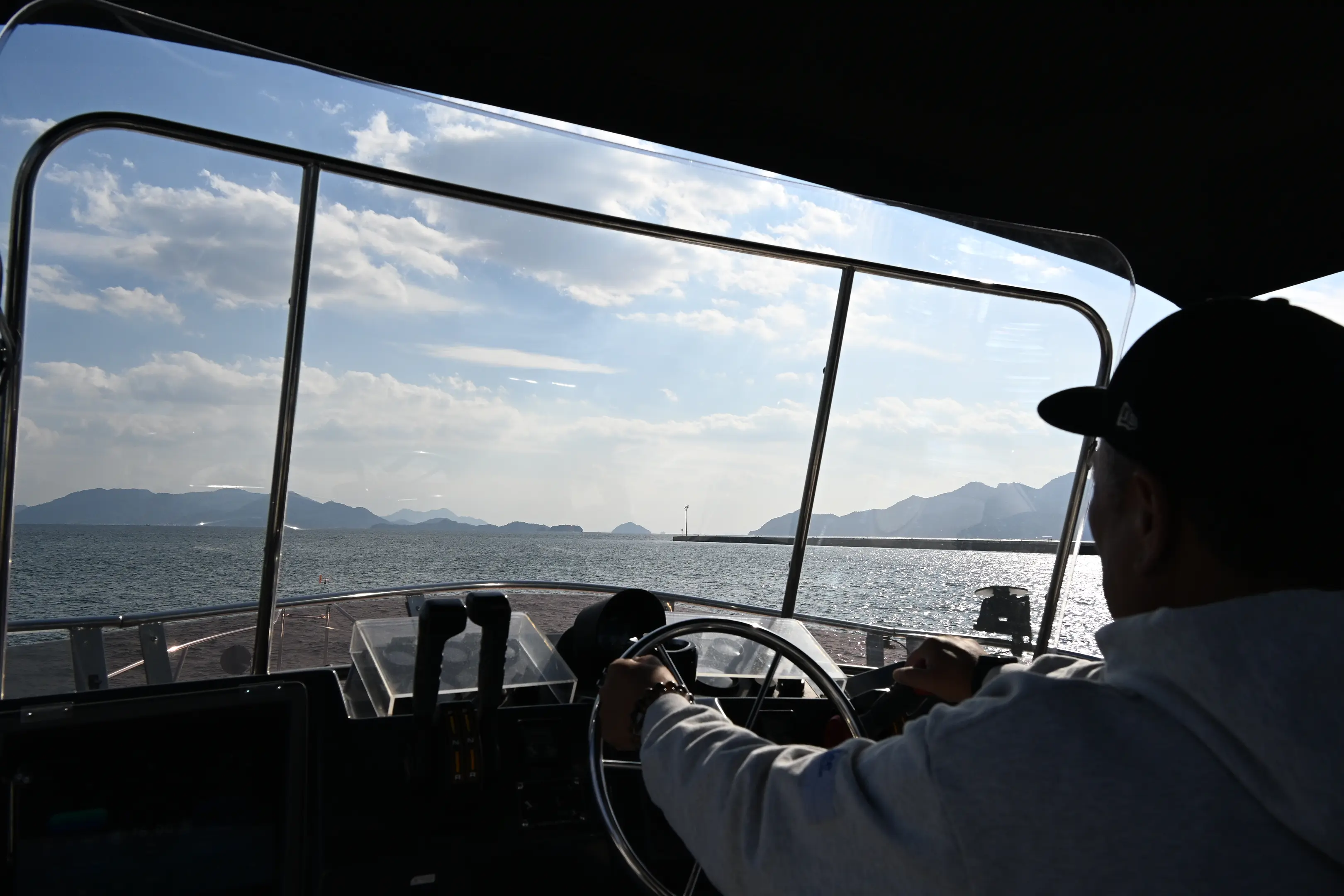
Imagine a private cruiser departing from a quiet pier in Hatsukaichi. No fixed schedules. No loud tour groups. Just your boat, your pace, and where you go next. As you glide across the water, the majestic Miyajima torii comes alive, no longer a two-dimensional image but a colossal structure that you can navigate from various angles that most visitors never get to witness. The rays of sunlight dance on the water’s surface, constantly shifting and evolving, offering a unique perspective with each passing moment.
This geography, which most visitors overlook, comprises the 138 islands scattered across Hiroshima’s waters. Reaching Etajima from Miyajima by car takes over two hours of frustrating driving and navigation. By sea? Fifteen minutes.
You move easily between small fishing villages and coastal temples, hidden beaches and quiet ports. The sea becomes a bridge, not a barrier. Small groups—say, 2 to 10 people—fit comfortably on these cruisers. Many bring food, transforming the journey into something truly intimate: a meal shared while the landscape slowly moves all around you.
You start noticing things that become invisible from land. These include how light changes color in the water at different times of day, how each island has its distinct personality, and how rhythm matters when you’re moving through a landscape instead of just driving past it.
When history is still breathing
Fifteen minutes by train from Hiroshima Station, and you could be walking in a different century.
Kaita Town prospered during the Edo period as a key way station on the Saigoku Kaido—the old mountain road connecting the capital to Kyushu. Samurai stopped here. Officials passed through. The rhythms of Japanese life flowed through these streets for centuries. Then, in 1945, most of Hiroshima’s historical buildings disappeared.
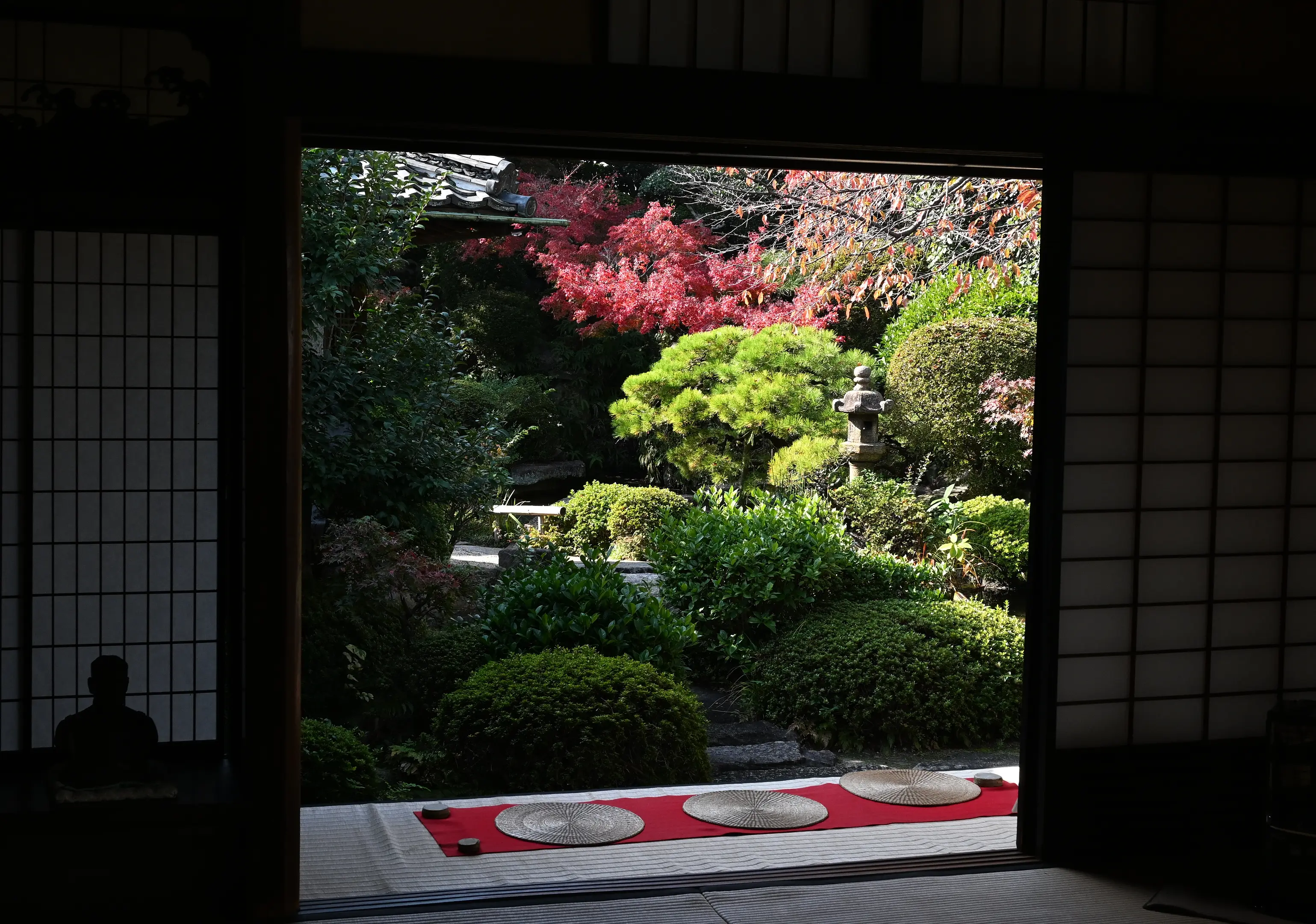
But the Chiba Family residence survived. Push through the heavy wooden doors and the air changes immediately. You smell the aged tatami mats. You smell the patina on old wood. You feel the slight humidity of spaces that have held generations of lives.
You walk on the same floorboards as samurai who stopped here during their mandatory journeys to Edo. You see exactly where bureaucrats handled important documents. You stand in rooms where ordinary families ate dinner, decade after decade, century after century.
The garden visible from the main room tells its gentle story through the seasons. A wild mountain cherry blooms first in March. Spring brings brilliant pink and orange azaleas. Autumn turns everything a deep burgundy and gold. In the stillness of winter, snow gently collects on age-old stones, revealing the essence of Japanese aesthetics: beauty resides in transience, and change is the very heart of it all.
This is what survived the bomb. Not because of its political importance or wide fame, but because people chose to keep it alive. And now you’re standing in it, breathing the same air, walking the same boards. Truly magical.
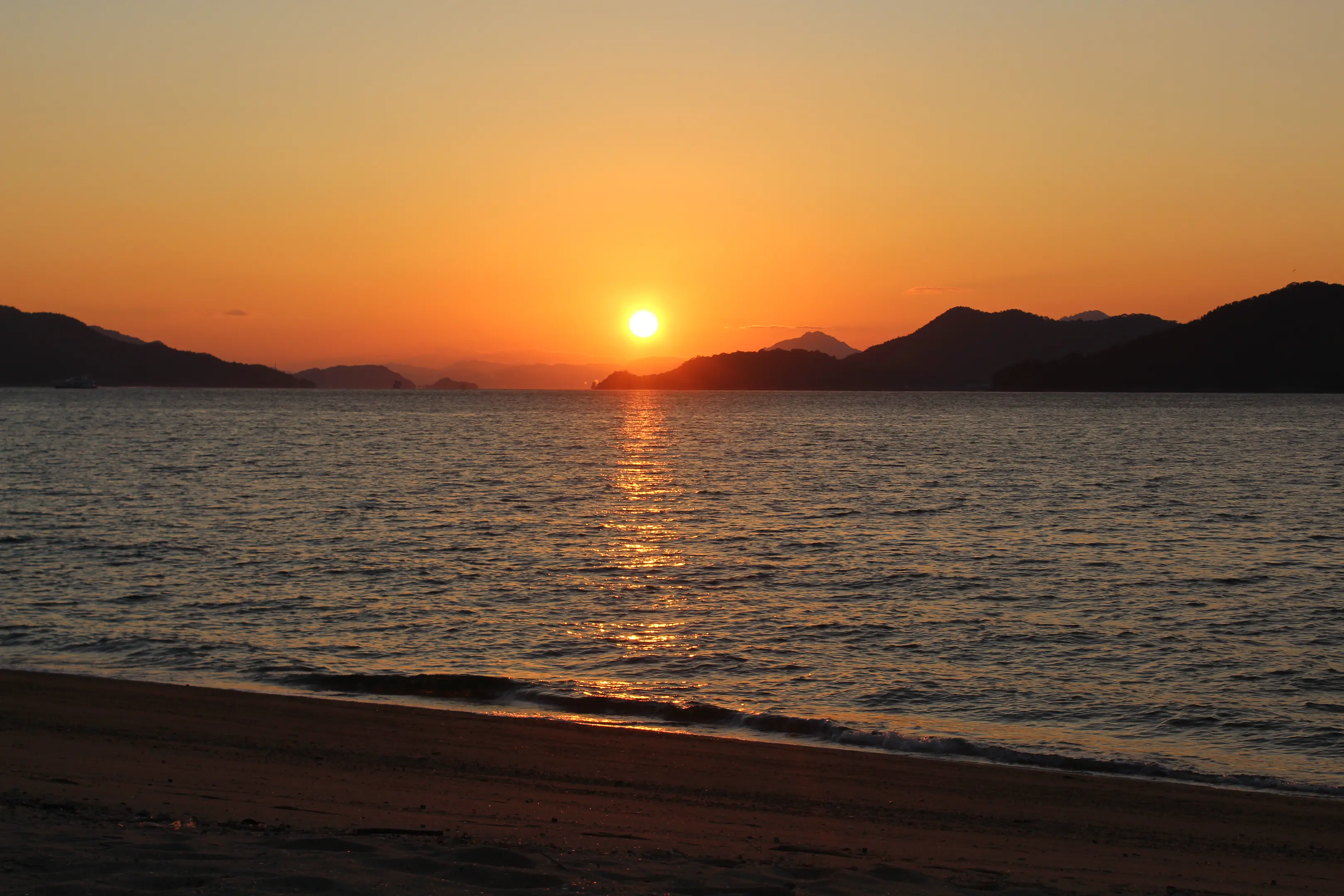
Finish the day at Bayside Beach Saka. Just thirty minutes from downtown Hiroshima, this 1,200-meter stretch of sandy shore hugs National Route 31, making it the closest swimming beach to the city center.
The beach stretches wide and open, free from the crowds that gather at more famous spots. Here, you can claim your own piece of sand and watch as the sun descends slowly toward the horizon, painting the water in layers of amber, rose, and violet.
It's the kind of sunset that makes you pause. The kind that reminds you why people have always gathered at the water's edge when the light changes. No monuments, no tickets, no guided explanations. Just you, the beach, and the breathtaking spectacle.
A 30-minute drive or a five-minute train ride, or a step on the right boat. That’s all it takes to step into a different relationship with Hiroshima.
This is a city full of people who keep creating. Brush makers teaching their craft, boat captains navigating between islands, and families opening the doors of a 250-year-old house because they believe it’s worth keeping alive.
Being there, you become part of the city’s ongoing story. And this engagement uncovers a Hiroshima that refuses to be just a memory.
By Isabelle VanSteenkiste, journalist.